Community Economic Development: Turning Assets Into Leverage
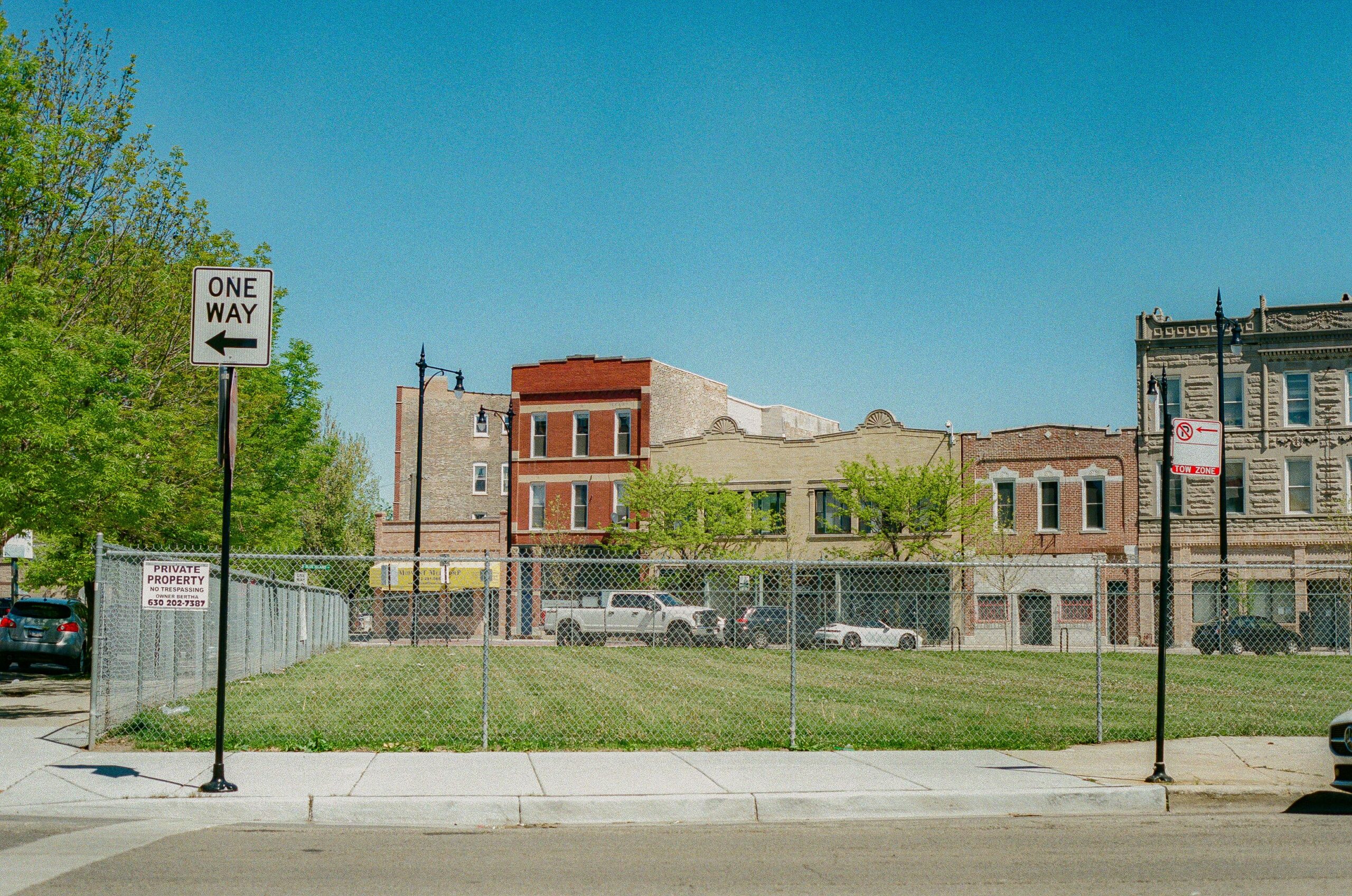
Ask anyone from Chicago’s South Side what the neighborhood has going for it, and you’ll hear the same list every time. Land. A church that’s been here longer than most of the people asking. A culture that shows up loud every single summer. Neighbors who’ve known each other for thirty years. Real money moving through, even in a neighborhood that’s had to fight for every dollar of it.
Nobody’s wrong about any of that. The South Side has never actually been short on what it has.
Here’s the part that gets left out, though: none of that automatically means anything to a developer sitting across the table. A community can hold every one of those things for years and still watch outside investors build right around it, like it isn’t even there.
Think about it like this. A savings account sitting untouched isn’t collateral until a bank agrees to treat it that way. A pile of firewood isn’t heat until somebody strikes a match. Having something and having power with it are two different states, and the jump from one to the other doesn’t happen automatically. It has to be built.
That gap is the whole story of community economic development. It’s the work of turning what a neighborhood already holds into something a developer, a city, or an investor actually has to answer to, instead of waiting for somebody else to decide what the neighborhood’s future looks like.
So let’s slow down and actually walk through this. What separates something a neighborhood merely owns from something a neighborhood can actually use through community economic development?
Asset or Leverage? Here’s the Actual Test
Try this test on anything your neighborhood holds: land, a church, a business corridor, whatever comes to mind first.
Ask one question: can a developer still close the deal without accounting for it? If the answer is yes, that’s an asset. It’s real, it has value, but it isn’t doing any work at the table yet. It’s a name on a list, not a chip you can actually play.
Leverage only shows up once that thing starts changing what the other side can actually do. That shows up in very specific places:
- Who gets access
- Where the capital flows
- What gets built, and where
- Whether demand even gets taken seriously
- Who’s entitled to what
- Who gets a seat in the room
- Who executes the plan
- Who ends up seeing the return
Here’s a simple way to hold onto this distinction: if they can route around it, you’re holding an asset. If they have to negotiate with it, you’re holding leverage.
That difference isn’t abstract. It’s at the heart of community economic development, and it plays out differently depending on what a community is actually working with: land, an institution, culture, relationships, or money. Each one has its own version of this test, and its own way of failing it.
Let’s take them one at a time, starting with the asset most people notice first because you can literally see it from the street: land.
Land: Who Actually Decides What Gets Built?
Here’s something worth sitting with. Chicago’s South Side isn’t short on land. It’s sitting on a mountain of it, making land one of the most visible starting points for community economic development.
Why the Vacant Lots Are There in the First Place
According to ABC7 Chicago’s reporting on Emerald South’s Terra Firma initiative, vacant lots make up 67% of all vacant land on the South Side, compared to just 4% on the North Side. Zoom out to the whole county, and it’s worse: 93% of Cook County’s more than 30,000 vacant lots sit in communities of color, versus 7% in majority-white neighborhoods.
It’s worth pausing on why that gap exists at all, because it’s not really a story about land. It’s a story about who got approved for a mortgage in 1955 and who didn’t. For decades, banks drew literal red lines around Black neighborhoods on city maps and refused to lend inside them, a practice known as redlining. Buildings that couldn’t get repair loans eventually got abandoned. Abandoned buildings got demolished. Demolished buildings became vacant lots. The empty land you see today on the South Side is the physical residue of a lending decision made seventy years ago, still sitting there, still empty, because nobody with capital ever had a reason to touch it since.
That’s important context, because it means the land itself was never the problem. The problem was always who got to decide what happened to it next.
How Woodlawn Turned Ownership Into Actual Control
Emerald South has been working against that history directly, clearing and preparing more than 100 of the 205 acres in its Terra Firma initiative on the Mid-South Side. That’s real, visible progress. But it’s also only half the story, and it’s the easier half.
The harder half, and the part that community economic development ultimately depends on, is who gets to decide what happens to land once it’s cleared. A cleared lot with no plan behind it is still just an empty lot, waiting for whoever shows up first with a checkbook to decide its future for it.
Woodlawn Central’s zoning approval is a case study in getting that order right. It didn’t get approved after residents reacted to a finished plan somebody else wrote and presented to them. It got approved after years of community engagement sessions, sponsored by the alderman’s office since 2021, that put real, binding terms directly into the development agreement before a single shovel hit the ground: a 20% affordable housing requirement, priority access for Black-owned and local businesses over national chains, and units actually built for the people already living there, not for whoever a developer assumed would want to move in.
That sequence matters more than it might seem to at first. A developer can always add “community benefits” to a project after the fact, once people start asking questions, as a kind of goodwill gesture. Woodlawn didn’t wait around for that gesture. The terms were locked in before construction, not offered afterward as a favor.
And the pattern isn’t isolated to one project. Cook County Land Bank Authority just posted its highest revenue year since 2018, redeveloping over 2,000 vacant properties countywide and generating more than $291 million in cumulative community wealth as of early 2026. That’s what community economic development looks like when land stops sitting idle and starts moving through channels the community actually controls, instead of waiting on somebody else’s timeline.
Land is the most visible community asset on the South Side. But land needs someone trusted enough to steward it once it’s activated, and trust and stewardship turn out to be two very different things.
Institutions: Trust Gets You in the Room. Capacity Keeps You There.
Here’s a distinction most people never think to make: being trusted and being able to execute are two completely different skills, and an institution can absolutely have one without the other.
Why Trust Alone Isn’t Enough
Plenty of institutions are deeply respected in their neighborhoods, and still get quietly bypassed when a real development deal starts moving. It’s not because anyone doubts their standing. It’s because respect doesn’t automatically come with the operating machinery a deal actually requires: staff who can negotiate contracts, a legal structure that can hold and manage property, the financial capacity to stay in a deal for years instead of walking away after the ribbon-cutting.
Think of it like the difference between being invited to speak at a meeting and actually having a vote once you’re in the room. One is recognition. The other is power, and community economic development needs both.
What Real Institutional Capacity Looks Like in Practice
The Apostolic Church of God is the version of this done right. ACOG has held deep standing in Woodlawn for over five decades, on land it owns and has committed to never selling. It’s spent 90+ years opening its doors and staying in the fight for this neighborhood, long before anyone in the room was talking about zoning approvals or development agreements. That history built the trust, and the trust is real.
But trust alone doesn’t move a mixed-use district forward. What actually did that was ACOG Ventures, the development arm the church built specifically for this purpose: to execute Woodlawn Central, negotiate the actual terms, and stay accountable to the deal long after the ribbon-cutting photos come down and the news cameras leave.
That’s the whole lesson hiding in this example: respect gets you invited to the table. Capacity is what lets you actually negotiate once you’re sitting in the chair.
Culture: It’s Not Decoration, It’s Data
Watch how culture usually gets treated in development conversations, and a pattern shows up fast. A mural gets added to the rendering. A drumline gets booked for the ribbon-cutting. Something gets bolted onto the finished project to make it feel more “authentic” than the actual process that built it.
Why Culture Gets Treated as an Afterthought
That order is backwards, and it’s worth understanding exactly why. Developers and investors are usually looking for evidence of demand, some signal that people will actually show up, spend money, and keep coming back. Culture, when it’s treated as decoration, never gets asked to provide that evidence. It just gets asked to look good in a rendering.
But culture doesn’t decorate an economy. It builds one. It shapes where people physically gather, what they spend money on, and what they come back for, again and again, month after month. Followed far enough, that turns into something measurable: culture drives activity, activity drives demand, and demand is the exact thing investors actually respond to when they’re deciding where to put their money.
The Proof Is Already Happening on 75th Street
“Spend in the Black” makes that case better than any argument could. The shopping event that takes over 75th Street and King Drive in Chicago’s 6th Ward has drawn more than 100 vendors, most of them Black-owned, and ABC7 Chicago reports organizers estimating half a million to a million dollars circulating across just three blocks in a single day.
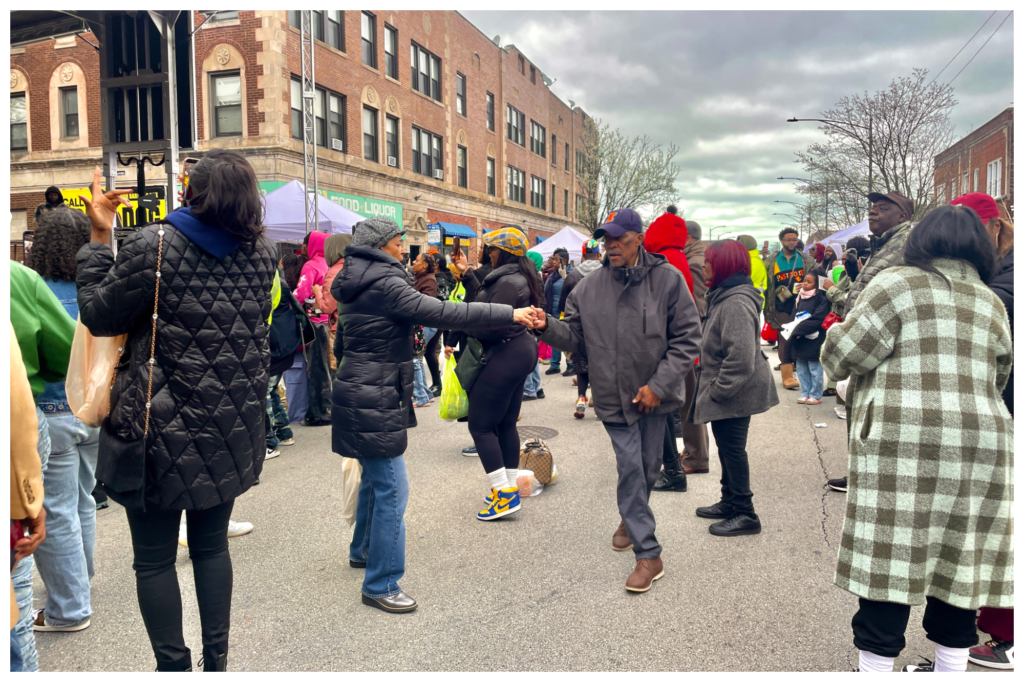
It didn’t stop after one good year, either. The event came back in April 2026, expanding into Chatham with new grants for local entrepreneurs, after the first year topped $1 million in sales. Organizers now call it the single greatest concentration of Black businesses in one corridor, on one day, anywhere in the city.
That’s not a feel-good moment repeating itself for good press. That’s a corridor generating real, trackable, repeatable demand in a place outside investors might otherwise assume has none. Culture, tracked and repeated over time, is a data set. It belongs in the deal before the financial terms get decided, not tacked on afterward to make things look rooted.
Relationships: Can Your Network Actually Move Something?
Everybody has contacts. That’s never been rare, and it’s never been the differentiator either. A group text with forty names in it isn’t infrastructure. It’s just a group text.
The Difference Between a Contact List and a Coalition
Here’s the real test: can that network mobilize people, build a coalition fast, and produce an actual decision the moment one is needed? A real coalition has already sorted out who calls who, who trusts who, and who’s willing to show up on short notice, long before there’s an actual fight to show up for. If none of that groundwork exists yet, the network isn’t infrastructure. It’s potential, and potential doesn’t win anything on its own.
Kenwood Oakland Community Organization has passed that test more than once, and both times, the win happened fast once it mattered:
- When Mercy Hospital was slated to close, KOCO led a four-month fight alongside a coalition of clergy, unions, and labor organizations, and the hospital stayed open under new ownership.
- That same organizing muscle helped deliver the reopening of Dyett High School, after a 34-day hunger strike in 2015 pushed Chicago Public Schools to commit $14 million to reopen the school. A decade later, Dyett’s boys basketball team won a state title.
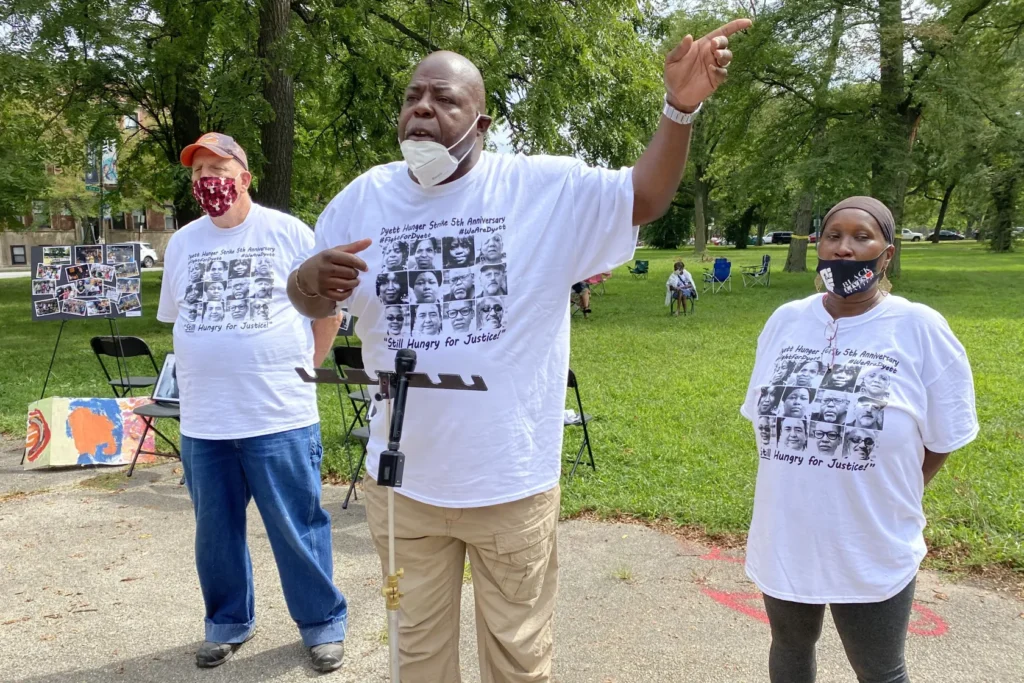
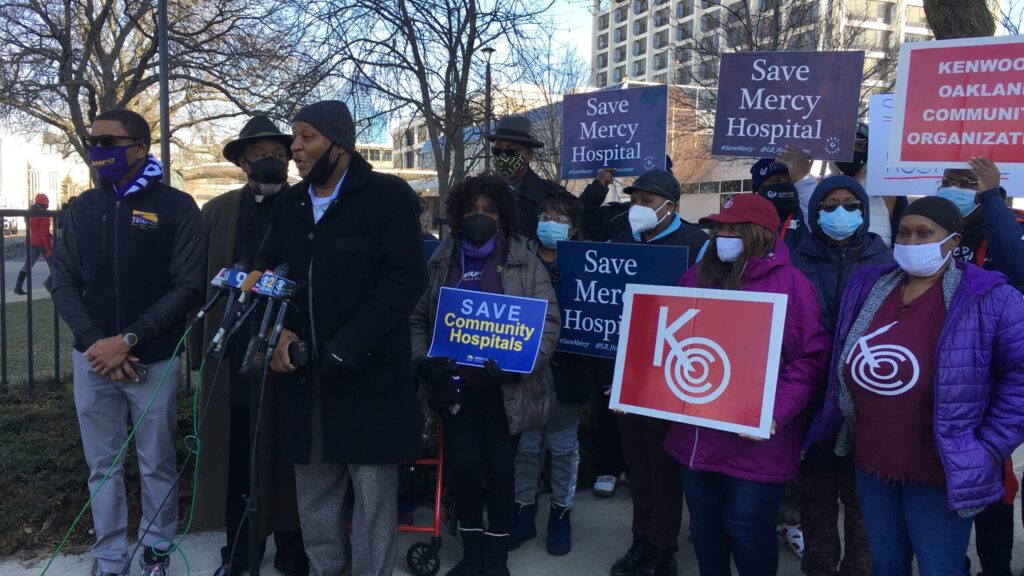
Neither win happened because a single meeting went well. Both happened because the relationships were already tested and ready to move before the fight started. That’s the real difference between knowing people and having infrastructure: infrastructure is what’s already standing when you actually need to lean on it. Build it before the fight starts, because there’s no building it once you’re already in one.
Spending Power: Where Does the Money Actually Land?
You’ve probably heard the stat about Black spending power more times than you can count. It gets repeated at every panel, every pitch deck, every conference, and on its own, it’s never once created leverage for anybody. The number was never the point. The real question underneath it is much simpler: who actually captures that money once it’s spent?
The Word for Money That Doesn’t Stay
Planners have a specific word for the part that slips away: leakage. It’s the share of resident spending that leaves a commercial corridor for somewhere else, dollar for dollar. Picture it like a bucket with small holes in the bottom: money gets poured in every day, and a portion of it just drains straight out before the neighborhood ever gets to use it.
On a lot of South Side commercial strips, that leakage runs high, and every dollar that leaks is a dollar a local business never got the chance to earn.
Why Tracking the Number Changes the Conversation
Spending power without a local market built to catch it isn’t leverage. It’s just revenue for whoever’s positioned to grab it, almost always somewhere outside the neighborhood generating it in the first place.
What actually flips that equation is documentation. A community that tracks its own spending, what stays and what leaks, walks into a negotiation holding a number the other side has to respond to. That’s the real difference between asking for investment and pointing straight at a market someone else is already failing to capture. One is a request. The other is proof.
The Real Work is Activation
Here’s the part that actually matters most. Almost every neighborhood on the South Side already has some version of these five: land, institutions, culture, relationships, spending. That was never the hard part.
What’s missing is simpler to name, and harder to fix: these five almost never show up in the same room at the same time. Land gets discussed in one meeting. Culture comes up in a completely different one. Spending numbers never get written down at all.
Here’s what happens when they stay scattered like that:
- Land without a real plan behind it eventually becomes part of somebody else’s plan.
- An institution without capacity gets bypassed, no matter how respected it is.
- Culture without a market gets monetized somewhere else, by somebody else.
- Relationships without coordination get quietly ignored.
- Spending without local capture leaves the neighborhood every single day, whether anyone’s counting or not.
An asset becomes leverage the moment the other side can no longer afford to ignore it. That’s the actual work of community economic development on the South Side right now. Not accumulating more. Activating what’s already here, together, at the same table, in the same negotiation.
Rooted. Reclaimed. Ours.
Frequently Asked Questions
What is community economic development?
Community economic development is the process of building a neighborhood’s own capacity to generate wealth, ownership, and negotiating power using the assets it already has: land, institutions, culture, relationships, and spending. Instead of waiting on outside investment to define the neighborhood’s future, the community sets the terms first.
What’s the difference between a community asset and community leverage?
A community asset is something a community owns or holds. Leverage is what that asset becomes once it changes what the other side of a negotiation, a developer, city, or investor, is able to do. If they can still move forward without accounting for it, it’s an asset, not leverage yet.
Why does Chicago’s South Side have so much vacant land?
Chicago’s South Side has so much vacant land because decades of redlining, discriminatory lending, population loss, and disinvestment left large numbers of properties abandoned or underused. Those patterns shaped where investment flowed and where it didn’t. Today, vacant lots make up 67% of all vacant land on the South Side, compared to just 4% on the North Side. Across Cook County, 93% of more than 30,000 vacant lots sit in communities of color, while only 7% are in majority-white neighborhoods.
How did Kenwood Oakland Community Organization save Mercy Hospital?
KOCO built a coalition of clergy, labor unions, community organizations, and residents and spent four months organizing against Mercy Hospital’s planned closure. The campaign put sustained pressure on decision-makers and helped keep the hospital open under new ownership.
What does “Spend in the Black” show about culture as economic leverage? “
Spend in the Black” shows that concentrated Black cultural and economic activity produces real, trackable market demand. The Chicago event on 75th Street and King Drive has drawn over 100 vendors and an estimated half a million to a million dollars in spending across three blocks in a single day, and returned in April 2026 with new grants for local entrepreneurs.
What is redlining, and why does it still matter today?
Redlining was the practice of banks refusing to issue loans or insurance in neighborhoods, mostly Black, that they marked off on maps with red lines. It was outlawed decades ago, but the vacant lots, disinvested corridors, and lower property values it created are still visible on the South Side today, which is why closing that gap takes deliberate community-led investment rather than time alone.
Explore the latest news, community highlights, development updates, and impactful stories shaping the future of Woodlawn Central and Chicago’s South Side.

Woodlawn's News & Announcements

connect
South Side Soundtrack
Our Community ● Our Community ● Our Community ● Our Community ● Our Community ● Our Community ● Our Community ● Our Community ● Our Community ●


