How Black Economic Power Can Build Lasting Community Wealth
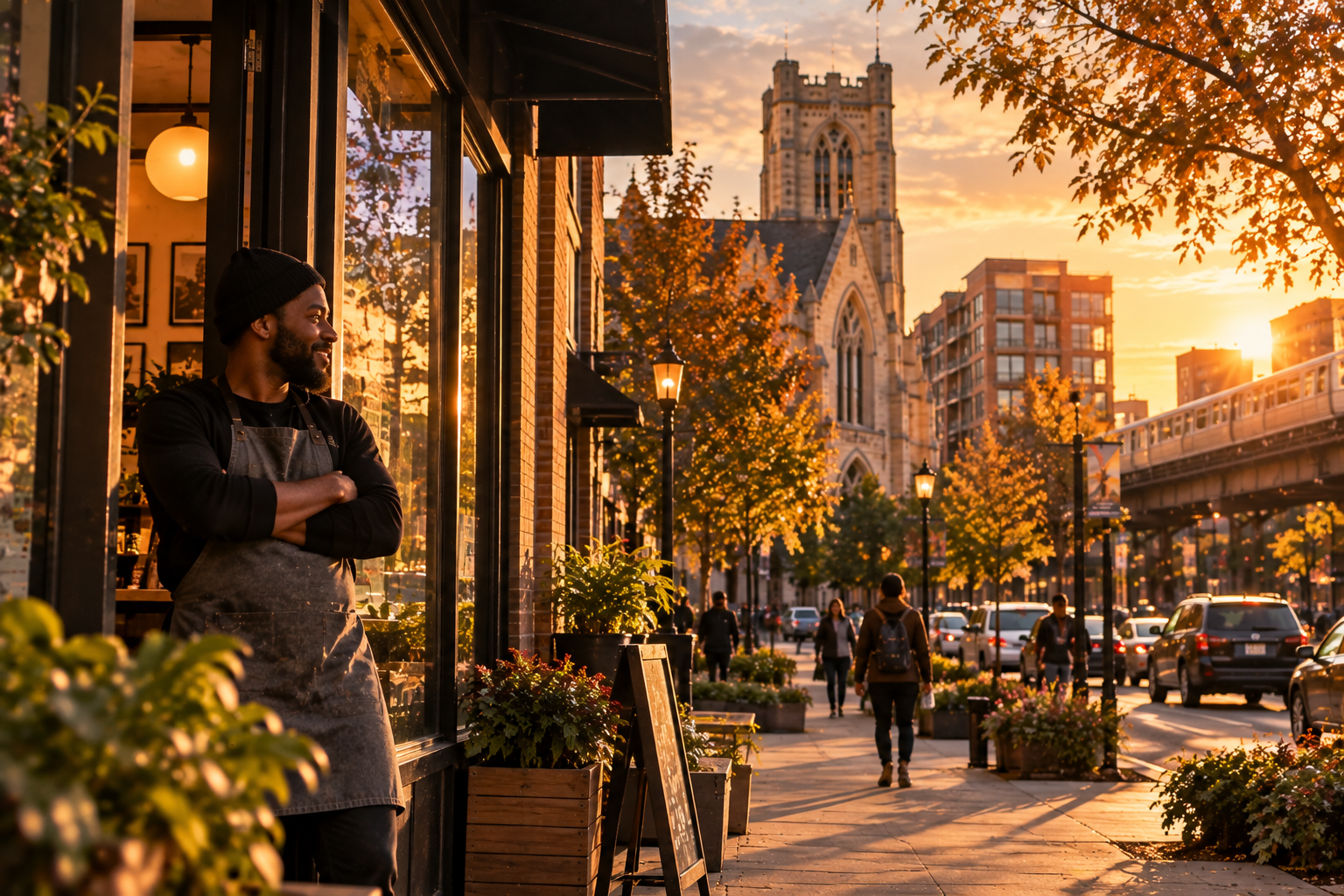
Woodlawn Chicago isn’t waiting on someone else to bring money into the neighborhood. Money is already moving through it every day, through grants, church offerings, and paychecks. That’s economic power: the money, land, and institutions a community already controls.
The real question is what happens to that power after it shows up. What does it become?
Does economic activity help create land, housing, businesses, equity, infrastructure, or institutions that people in the community can continue to benefit from? Or does the value created in the neighborhood ultimately end up owned somewhere else?
That is where economic development becomes a question of conversion, not simply circulation. Money moving through a neighborhood matters, but movement alone does not create Black wealth. In this context, Black power includes the ability to influence what resources become, who controls the assets they create, and who benefits from their value over time. The larger opportunity is organizing economic activity so that more of it can be converted into assets, ownership, and long-term economic capacity.
Woodlawn Central, the new housing and business district going up around the Apostolic Church of God, is a working example of what that looks like. The development grew from land and institutional capacity already rooted in the neighborhood and is bringing together housing, commerce, culture, transportation, and employment.
The point is not that Woodlawn Central provides the only model. It is that communities can begin economic development by looking differently at the assets they already have.
What Is Economic Development? A Simple Breakdown
Economic development can sound like a big, official term, but at its core it is about building the conditions for a community to become economically stronger over time.
That strength cannot be measured only by how much money gets spent or how many transactions take place. A neighborhood can have significant economic activity without building significant community wealth.
People can work without owning the businesses employing them. Residents can spend heavily without owning the companies receiving that spending. A development can increase the value of nearby land without existing residents having a stake in that value.
This is why the better question is not simply whether a dollar “stays” or “leaves.” It is what economic activity ultimately helps create and who has control over the result.
How Economic Development Can Build Black Wealth
For economic development to contribute to lasting Black wealth, more economic activity has to create or strengthen assets that continue producing value over time. That can include:
- Land
- Housing
- Locally rooted businesses
- Equity
- Intellectual property
- Infrastructure
- Stronger community institutions
Operating expenses still matter. Salaries have to be paid. Programs have to run. Businesses need inventory. Churches and nonprofits need to keep their doors open. Community wealth building does not mean every dollar must become an investment. It means creating enough capacity to operate today while also building assets for tomorrow.
That distinction is at the center of the economic development conversation in Woodlawn Chicago and the larger question this article explores: how existing Black economic power can be organized into lasting community wealth.
Economic Development in Woodlawn Chicago: Why It’s Different
Most economic development plans start by trying to attract outside money and outside companies. Woodlawn Central starts somewhere else: with the economic power already in the neighborhood, including land, institutions, church giving, working people, and a plan to organize those resources instead of waiting on anyone else.
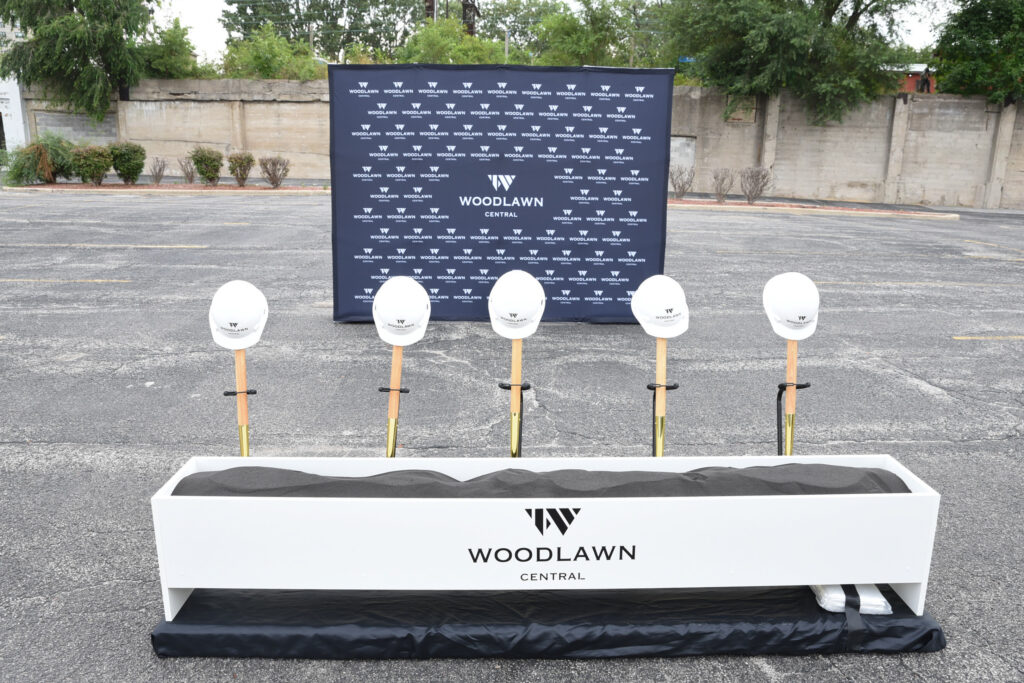
That shows up in three places this blog breaks down: nonprofit funding, church-owned land, and job creation.Across all three, the question is what those resources ultimately help the community build and retain.
You can read more about the district’s full plan on the Woodlawn Central site plan or check the FAQ page for project specifics.
Black-Led Nonprofit Funding Gap: What the Data Shows
A grant is funding provided to an organization to support its programs, operations, or specific initiatives, usually with no expectation of repayment.
But receiving an award and having capital that an organization can strategically deploy are not necessarily the same thing. Restrictions, timing, duration, and reporting requirements can all influence what an organization is able to accomplish with the funding it receives.
What the Research Shows
- Black-led nonprofits bring in 24% less revenue than white-led organizations doing similar work, according to a 2020 study from Echoing Green and the Bridgespan Group.
- For groups focused on Black men and boys, that gap widens to 45% less revenue, with unrestricted net assets running 91% smaller.
- Black-led organizations also receive far less unrestricted funding, money that gives organizations greater discretion over how resources are used, making it harder to build flexible financial capacity.
The funding disparity matters, but the economic empowerment question goes beyond how much money an organization receives. It also includes how much control that organization has over the capital once it arrives.
Restricted funding can support important work while giving an organization limited ability to acquire an asset, strengthen its balance sheet, respond to an opportunity, or plan beyond a single funding period. Flexible and multi-year capital can create more room for those decisions.
What That Looks Like in Chicago
The Resident Association of Greater Englewood, a South Side nonprofit, spent over fifteen years with just a handful of steady supporters. Then, in the summer of 2020, it suddenly picked up more than two dozen new funders. According to AP reporting from April 2026, that surge faded almost as fast as it arrived, and the group had to rebuild the same small base it had before.
The experience illustrates why a surge in funding does not necessarily translate into lasting institutional strength. The longer-term question is whether an organization has greater financial capacity after a funding cycle ends than it had before.
What More Flexible Capital Can Make Possible
United Way of Metro Chicago’s United Neighborhood Equity Fund gives ten Black- and Brown-led nonprofits on the South and West Sides $50,000 each, with no restrictions, spread over two years.
Multi-year, unrestricted funding gives organizations greater flexibility to determine where resources can have the most value. Depending on an organization’s needs, that can include strengthening operations, planning over a longer period, responding to new opportunities, or combining grant funding with other resources.
For economic empowerment, that distinction matters. Capital becomes more powerful when an organization has the ability to strategically deploy it rather than simply administer it.
Economic Empowerment Through Church-Owned Land in Woodlawn
Black churches have long played roles extending beyond worship. Across generations, many have acquired land, employed people, operated social programs, organized residents, supported civic life, and built networks of trust deeply connected to the neighborhoods around them. That history also makes the Black church an important economic institution.
Every Sunday, Black churches across the country collect tithes from their members, an ongoing source of economic power most conversations about development skip past entirely.
Nobody tracks the exact national number, but estimates from Barna Group research, reported by the Houston Defender, put it somewhere between $2 billion and $19 billion a year.
Because there is no comprehensive national accounting of Black church giving, that wide range should be understood as an estimate rather than a precise measure. The more useful question for economic development is what the institutional capacity behind that giving can make possible over time.
Churches have operating responsibilities that cannot simply be replaced by investment. They employ people, maintain buildings, run ministries, support families, and provide services. Those functions are part of sustaining the institution and the community it serves.
The opportunity is to consider whether an institution can do both: meet its responsibilities today while also capitalizing some of the assets and economic capacity it has built over time.
The Apostolic Church of God provides one example of that approach. The church has owned the land under Woodlawn Central for more than fifty years, and that long-term land position became one of the foundational assets behind the Woodlawn Central vision. The development could begin with land already controlled by a community-rooted institution rather than beginning with the search for a site.
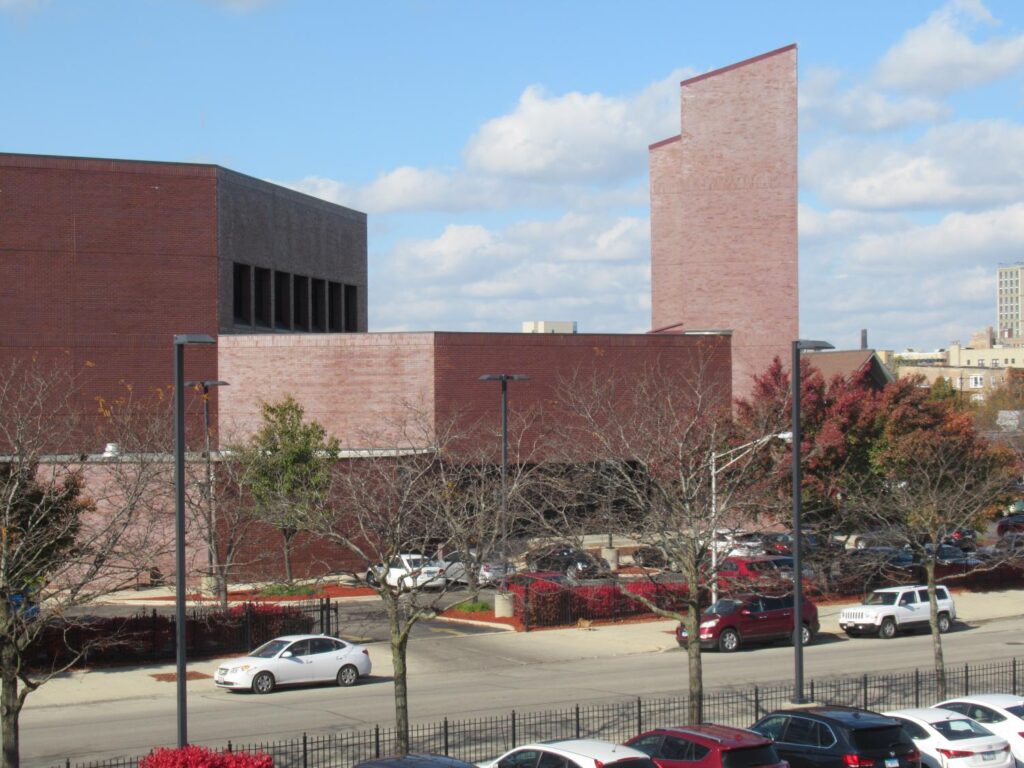
That commitment stretches across three generations, from Bishop Arthur Brazier to Bishop Byron T. Brazier and now J. Byron Brazier, lead developer of Woodlawn Central. ACOG Ventures, the church’s development arm, is helping carry that strategy forward.
The larger lesson is not that every church should become a developer. It is that community institutions may already possess assets with economic potential beyond their immediate use. Land, organizational capacity, relationships, consistent giving, and community trust can all become forms of leverage when they are deliberately organized.
It’s not only happening in Woodlawn. In Pullman, Trinity United Church of Christ started planning its own project, Imani Village, back in the 1970s and ‘80s. Today it’s turning 32 acres into affordable homes, senior housing, and a community garden. The structure is different, but Imani Village offers another example of a Black church connecting institutionally controlled land to a longer-term community development strategy.
Black Unemployment and Job Creation in Woodlawn Chicago
A lot of job creation conversations start by asking which outside companies can be convinced to move in. Business recruitment can play an important role in economic development, but Woodlawn does not begin as an empty market. Residents already spend money, businesses already serve customers, institutions already employ people, and cultural and commercial activity already brings people into the neighborhood.
The economic development opportunity is to organize those existing conditions so they can support additional businesses, investment, and permanent employment.
The job gap this needs to close is real:
- As of March 2026, Black unemployment sat at 7.1%, according to Bureau of Labor Statistics data.
- That’s almost double the white unemployment rate of 3.6%.
- It’s well above the national average of 4.3%.
Those numbers demonstrate an employment disparity, but the disparity itself is not economic power. It is evidence that the broader economy is not producing equal employment outcomes for Black workers. Sustainable job creation requires building economic conditions capable of supporting employment over time.
Woodlawn Central is designed to create around 700 permanent jobs in a hotel, a theater, retail stores, and a food market, all located directly in the neighborhood.
What matters is how those uses connect. New housing can bring additional residents and demand. Hospitality and cultural spaces can bring visitors. Retail and food businesses can serve that activity. Those businesses, in turn, require employees to operate.
This creates a more durable relationship between development and employment. Instead of treating jobs as something that can simply be imported into a neighborhood, the strategy is to build the economic conditions that give businesses and employment a reason to remain.
Community Land Trusts and Black Economic Development Nationwide
The strategy behind Woodlawn Central, controlling the land before building on it, isn’t new, and it isn’t limited to Chicago.
In the 1980s, residents in Boston’s Roxbury and Dorchester neighborhoods faced a similar problem: empty, city-owned land at risk of being bought up by outside investors. Residents organized and pushed the city to grant the Dudley Street Neighborhood Initiative, eminent domain authority over privately owned vacant land within a designated area, giving the organization an unusual level of influence over neighborhood land use. That effort became a community land trust, with Dudley Neighbors Inc. established to hold land for long-term community benefit and help preserve affordable housing and other community assets.
Its structure is very different from Woodlawn Central, but the progression is useful. Residents organized around a shared concern about neighborhood land. That organization helped create greater control over how the land would be used, and that control created the conditions for long-term community ownership and affordability.
The lesson is not that every community should establish a land trust. It is that organized communities can create leverage, and leverage can provide greater influence over the assets shaping their economic future.
Why Economic Development Has to Result in Ownership
There’s already plenty of economic power moving through Black communities like Woodlawn. Money moves through grants, tithes, and paychecks constantly.
The challenge is that participating in economic activity and owning the assets that benefit from that activity are different things. A resident can contribute to a company’s growth as a customer without owning any part of that company. A nonprofit can successfully administer significant funding without becoming financially stronger once the funding ends. A worker can help build or operate an asset without holding an ownership stake in it.
A neighborhood can even become substantially more valuable while much of the ownership of that value remains outside the neighborhood.
None of those forms of participation is inherently negative. Employment matters. Consumer activity matters. Program funding matters. The problem emerges when participation becomes the primary relationship Black communities have with economic growth while ownership and control remain concentrated elsewhere.
This is why Black wealth has to be part of the economic development conversation. Economic empowerment is not simply about increasing the amount of money moving through a community. It is about increasing the ability of people, businesses, and institutions rooted there to shape, own, and benefit from the value being created.
From Black Economic Power to Lasting Community Wealth
Black communities do not begin the economic development conversation without assets. Economic power already exists through labor, consumer spending, businesses, institutions, land, culture, relationships, and demand.
The challenge is organizing those assets so that more of the value they generate can be converted into lasting economic capacity and greater opportunities for ownership.
That does not mean every dollar has to remain inside one neighborhood or that every development should follow the same ownership model. It means looking beyond the immediate transaction and asking whether economic growth leaves residents and institutions with greater capacity than they had before.
Strong economic development should help create functioning businesses, sustainable employment, housing opportunities, stronger institutions, useful infrastructure, and meaningful pathways to ownership.
For Woodlawn Chicago, the larger question is therefore not simply how much investment enters the neighborhood. It is what that investment becomes, who has influence over it, and how people and institutions already rooted in Woodlawn benefit from it over time.
To follow Woodlawn Central as the project moves forward, sign up for Central Story for project updates, neighborhood stories, and news from Woodlawn.
Frequently Asked Questions
What is economic development in simple terms?
Economic development is the process of strengthening an economy by creating conditions for businesses, jobs, investment, infrastructure, and other economic opportunities to grow.
What is community wealth building?
Community wealth building is an approach to economic development that focuses on creating long-term assets, ownership, stronger institutions, businesses, and economic capacity within a community rather than measuring success only by how much economic activity occurs.
How can economic development help build Black wealth?
Economic development can contribute to Black wealth when economic growth creates opportunities to own assets, build businesses, access housing, strengthen institutions, gain equity, and participate in the long-term value created through development.
What is Woodlawn Central and how is it connected to Woodlawn Chicago?
Woodlawn Central is a mixed-use development planned in Woodlawn Chicago that brings together housing, commercial space, hospitality, arts and culture, transportation, and other community uses. The project grew from land and institutional capacity connected to the Apostolic Church of God.
Why does unrestricted funding matter to community organizations?
Unrestricted funding gives organizations greater discretion over how money is used. That flexibility can help organizations respond to changing needs, strengthen operations, plan over longer periods, and pursue opportunities that may not fit within narrowly restricted program funding.
How can community institutions support economic development?
Community institutions can contribute land, relationships, organizational capacity, capital, local knowledge, and long-term commitment. When those assets are organized strategically, institutions can play an active role in shaping economic development and strengthening the communities they already serve.
What is a community land trust?
A community land trust is typically a nonprofit organization that holds land for long-term community benefit. The model can help preserve affordable housing, limit exposure to land speculation, and give communities greater influence over how land is used over time.
Are there other community ownership models besides Woodlawn Central?
Yes. Communities use different structures depending on their assets, institutions, and goals. Imani Village in Chicago and the Dudley Street Neighborhood Initiative in Boston demonstrate different approaches to using institutional or community control of land as part of longer-term neighborhood development.
Explore the latest news, community highlights, development updates, and impactful stories shaping the future of Woodlawn Central and Chicago’s South Side.

Woodlawn's News & Announcements

connect
South Side Soundtrack
Our Community ● Our Community ● Our Community ● Our Community ● Our Community ● Our Community ● Our Community ● Our Community ● Our Community ●


